Our Advocacy for Gender Equity
Since its founding in 1881, AAUW has worked to advance gender equity for women and girls. Through its advocacy and activism, it has helped propel the passage of major legislation, including Title IX (1972), the Family Medical and Leave Act (1993), and the Lily Ledbetter Fair Pay Act (2009).
AAUW State College was founded to champion educational equity for women. For over 100 years, we have been a powerful force in our community, supporting individuals and organizations that promote AAUW’s vision of “Equity for All.” Much of our branch’s advocacy and activism work is organized by the Public Policy Committee, advancing the priority issues identified by AAUW at the state and national levels.
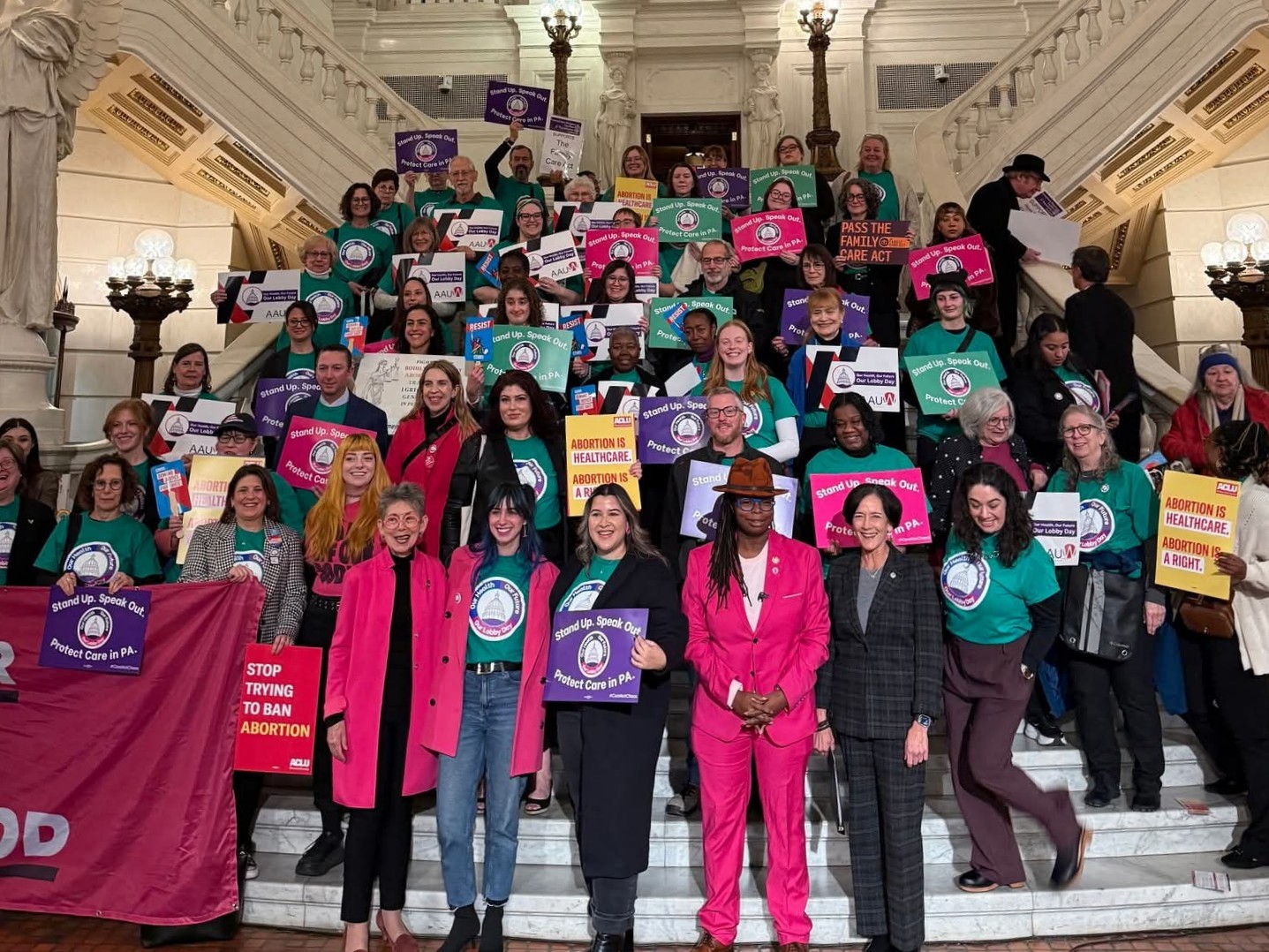
AAUW is a nonpartisan organization – but nonpartisan does not mean non-political. We advocate for policies that advance equity regardless of party. We also believe that expanding voting access is essential to equitable political participation. Visit our Non-Partisan Resources page for voter information, registration tools, and civic engagement resources.
Our Focus Areas
Education
Public education policy, Title IX, school funding, and book censorship
Economic Security
Pay equity, paid leave, redistricting reform, and the ERA
Women in Leadership
Advancing women across all sectors, NCCWSL scholarships, and career programs
Diversity & Inclusion
Cultural Empowerment, ¡Adelante! Book Club, and Day of Racial Healing
STEM
Programs and mini-grants for girls in science, technology, engineering, and math
Reproductive Rights
Protecting access to reproductive healthcare, contraception, and abortion
Education
Our Education Committee
Our Education Committee focuses on current issues affecting public schools in Pennsylvania, including school funding, cyber charter reform, literacy, teacher workforce, book censorship, and more. The committee monitors public education policy, attends legislative hearings in Harrisburg, meets with local legislators, and participates in AAUW-led advocacy events at the state capitol.
Our work is strengthened by alliances with advocacy groups including Education Voters of PA, PA Schools Work, and the Keystone State Education Coalition.
Current Issues in Pennsylvania
School Funding: The 2025–26 state budget delivered significant wins: a $565 million increase in adequacy and tax equity payments, $105 million for Basic Education Funding, $40 million for special education, $125 million for school facilities, and $100 million for school safety and mental health grants.
Cyber Charter Reform: A major policy win – reforms are redirecting approximately $300 million statewide back to traditional public schools.
Literacy: Only one-third of Pennsylvania fourth graders are proficient in reading (NAEP). The state has allocated $10 million for new literacy mandates, but advocates say more is needed.
Teacher Workforce: The student teacher stipend program has expanded to $30 million, serving over 4,000 students. Advocacy groups are pushing for $50 million.
School Vouchers: Pennsylvania voters continue to oppose diverting tax dollars to private and religious school vouchers. Our Education Committee actively monitors voucher legislation.
Title IX
In 1972, Title IX of the Education Amendments changed the face of education with 37 words: “No person in the United States shall, on the basis of sex, be excluded from participation in, be denied the benefits of, or be subjected to discrimination under any education program or activity receiving Federal financial assistance.”
Where Title IX Stands Today: Title IX protections are in active legal and political flux. In January 2025, a federal court vacated the Biden administration’s 2024 Title IX rule, which had expanded protections against discrimination based on sexual orientation and gender identity and strengthened safeguards for sexual assault survivors. The Department of Education has reverted to the 2020 regulations.
The current administration is using Title IX enforcement to challenge schools with inclusive transgender athlete policies, including suing states and freezing school funding. Two major cases on transgender athlete participation (West Virginia v. B.P.J. and Little v. Hecox) are before the U.S. Supreme Court, with decisions expected in 2026.
AAUW advocates for strengthening Title IX, reinstating survivor protections, affirming LGBTQ+ protections, and supporting the Patsy Mink and Louise Slaughter Gender Equity in Education Act. Read AAUW’s full Title IX position.
What We Do
- Offer programs that encourage girls to explore STEM and provide scholarships for science camps. Learn more about our STEM Program.
- Provide undergraduate scholarships to adult women who had to interrupt their education due to limited resources and difficult life situations. Learn more about our Scholarship Program.
- Fund scholarships to enable the Mid-State Literacy Council to teach English as a second language.
Education Resources
From AAUW
- The STEM Gap: Women and Girls in Science, Engineering, and Math
- Deeper in Debt: Women and Student Loans
- Women & Student Debt
- Sexual Misconduct in Schools
- Where We Stand: Sexual Harassment and Violence in School
- Know Your Rights: Sexual Harassment and Assault on Campus
- Know Your Rights: Equity in Athletics
- Girls and Mental Health
- The Preschool & Elementary Years
- STEM Education Advocacy
- Where We Stand: Title IX
- Fellowships & Grants
- Career Development Grants – up to $8,000 for women in underrepresented fields
Pennsylvania Education
- Education Voters of PA – advocacy for public education investment and cyber charter reform
- PA Schools Work – nonpartisan campaign for full and fair school funding
- Keystone State Education Coalition – grassroots coalition of school board members and administrators
- PA Department of Education
National Organizations
- National Women’s Law Center – education equity, Title IX enforcement, and gender justice
- Know Your IX – student-driven Title IX advocacy and resources
- NAEP / The Nation’s Report Card – national student achievement data
Economic Security
The Gender Pay Gap
Women in the United States earn just 81 cents for every dollar earned by men – a gap that has narrowed by only one cent in two decades. At the current rate, pay equality won’t be achieved until 2088. The gap is even wider for women of color: Black women earn 64 cents and Latinas earn 57 cents per dollar earned by white men. Over a 40-year career, this adds up to an estimated $542,800 in lost earnings.
AAUW advocates for strengthening the Equal Pay Act, eliminating salary history requirements, increasing wage transparency, and expanding access to affordable higher education. Read the 2026 Simple Truth report.
Paid Family & Medical Leave
The United States is one of the few developed countries that does not guarantee paid family or medical leave. While the Family and Medical Leave Act (FMLA) of 1993 provides job-protected unpaid leave, it fails to cover about 40% of workers and many who are covered cannot afford to take unpaid time off.
In Pennsylvania: There is no statewide paid leave requirement. Only Philadelphia, Pittsburgh, and Allegheny County have local paid sick leave ordinances.
HB 200 – The PA Family Care Act: A bipartisan bill (Rep. Dan Miller, D-Allegheny, and Rep. Natalie Mihalek, R) would create a state-administered paid family and medical leave insurance program providing 12–20 weeks of paid leave. The bill passed the House Labor & Industry Committee in March 2025 (14-12) but is still awaiting a full House floor vote. 81% of Pennsylvania voters support paid family leave. Pennsylvania would be the first swing state to pass such a law – neighboring New Jersey, New York, and Connecticut already have programs in place.
AAUW supports the availability of and access to quality paid family, medical, and sick leave. Read AAUW’s position on paid leave.
Redistricting Reform
AAUW State College endorses the work of Fair Districts PA and its affiliate, Fair Districts Centre County, in advocating for non-partisan redistricting and fair legislative rules.
Independent Redistricting Commission (HB 31 / SB 131): This legislation would create an 11-member independent commission to draw Pennsylvania’s political maps – balanced among parties and independents, with a transparent public process. The next redistricting cycle is 2031, making it urgent to get the commission in place. The bill is backed by Fair Districts PA, Common Cause PA, the League of Women Voters, and the Committee of Seventy.
Pennsylvania notably resisted pressure for mid-decade congressional redistricting in 2025, choosing not to join other states in partisan redraws.
The Equal Rights Amendment
The ERA – which would guarantee equal legal rights for all American citizens regardless of sex – has met the numerical requirement of 38 state ratifications but has not been added to the Constitution. Federal courts have upheld the 1982 ratification deadline, and the National Archives has declined to certify it.
Two bills in the 119th Congress (H.J.Res. 80 and S.J.Res. 38) would remove the deadline. A federal court case, Equal Means Equal v. Trump, had arguments scheduled for March 24, 2026. AAUW is a member of the ERA National Strategy Task Force and lists ERA recognition as a core public policy priority. Read AAUW’s ERA position.
Violence Against Women Act
VAWA was last reauthorized in 2022 with grant programs funded through 2027. However, the current administration’s FY2026 budget proposes cutting $208 million from the Office on Violence Against Women – a nearly 30% reduction from $713 million to approximately $505 million. An estimated 680,000 women and children could lose access to emergency housing, legal support, shelters, crisis centers, and medical care.
AAUW supports full funding for VAWA and its programs protecting survivors of domestic violence, sexual assault, dating violence, and stalking.
Economic Security Resources
From AAUW
- The Simple Truth About the Gender Pay Gap (2026)
- Fast Facts: The Gender Pay Gap
- Pay Gap FAQs
- Economic Security Issue Hub
- Start Smart & Work Smart – free salary negotiation training
- Where We Stand: Equal Rights Amendment
- Where We Stand: Paid Leave
- Deeper in Debt: Women and Student Loans
Pennsylvania
- Fair Districts PA – nonpartisan redistricting reform
- Fair Districts Centre County
- Women’s Law Project – legal advocacy for women’s rights in PA
- The PA Family Care Act (HB 200) – bipartisan paid leave legislation
National Organizations
- National Women’s Law Center – pay equity, workplace justice, and economic security
- ERA Coalition – tracking the Equal Rights Amendment
- Equal Pay Today – campaign for wage equality
- Paid Leave for the United States (PL+US) – national paid leave advocacy
Women in Leadership
Advancing Women in Leadership
Although women make up half of the labor force and earn the majority of college degrees in the United States, they remain underrepresented in leadership positions in politics, academia, and corporations. AAUW State College strives to support women’s advancement across all sectors in the Centre Region, from education and healthcare to government and business.
Many AAUW State College members are community leaders who provide advice and support to other women. We believe that increasing the number of women in leadership positions is essential to achieving workplace equity. Meet our Officers & Leadership team.
NCCWSL Scholarships
Each year, AAUW State College awards scholarships to college women to attend the National Conference for College Women Student Leaders (NCCWSL) – a multi-day leadership conference attended by several hundred women from across the country. Students leave with the skills and confidence to pursue their goals through workshops, panels, speakers, and peer networking.
The conference is hosted by NASPA (Student Affairs Administrators in Higher Education) in partnership with AAUW. The next conference is May 27–30, 2026, at the University of Maryland, College Park.
Salary Negotiation Training
AAUW offers free online programs to help women effectively negotiate salaries that reflect their skills and education:
- Start Smart – for college women entering the workforce
- Work Smart – for working women at any career stage
Over 190,000 women have been trained, and 70% report a positive impact on their salary negotiation ability. Access the free programs.
Leadership Resources
AAUW Programs
- Start Smart & Work Smart – free salary negotiation training
- Career Development Grants – up to $8,000 for women in underrepresented fields
- NCCWSL Conference – National Conference for College Women Student Leaders
AAUW Research
- Barriers and Bias: The Status of Women in Leadership
- Broken Ladders: Barriers to Women’s Representation in Nonprofit Leadership
- The Simple Truth About the Gender Pay Gap (2026)
Other Resources
- Women’s Power Gap – tracking women’s representation in leadership across sectors
- Fair Districts Centre County – advocating for equitable political representation
- Non-Partisan Resources – voter information and civic engagement tools
Diversity & Inclusion
AAUW State College embodies the goals and spirit of inclusion, diversity, and intersectionality across all branch activities and participants. We recognize that gender equity cannot be achieved without also addressing systemic racism and other forms of discrimination – our work is stronger when it reflects the experiences of all women.
The public is welcome to join branch members at all diversity programs. To participate, contact us at diversity@aauwstatecollege.org.
Our Diversity Committee meets the 3rd Friday of the month at Kitchen Garden at 9 AM. Committee meetings are open to AAUW members. Non-members interested in attending are welcome to contact diversity@aauwstatecollege.org to arrange an exploratory visit before joining the branch.
Cultural Empowerment for Women
This lunch program is co-sponsored with the Community Diversity Group, whose mission is to bring diverse peoples together to cultivate inclusive, engaged communities. It is offered twice each year, in March and October, and features a panel of diverse women exploring different themes.
¡Adelante! Book Club
Our ¡Adelante! Book Club (¡Adelante! means “moving forward” in Spanish) is modeled after the AAUW Diversity Outreach for Impact Program. We meet every other month on the third Thursday of the month via Zoom. Book selections portray diverse cultures in both fiction and nonfiction.
National Day of Racial Healing
The National Day of Racial Healing was founded by the W.K. Kellogg Foundation in 2017 with the understanding that racial healing is at the core of racial equity. Held in late January, the event brings people together in their common humanity and inspires collective action to create a more just and equitable world.
AAUW State College is a lead sponsor, along with the Borough of State College, Community Diversity Group, and the Borough’s Racial Equity Advisory Commission.
Diversity Resources
From AAUW
- AAUW DEI Commitment Statement & Toolkit
- AAUW Public Policy Priorities (2025–2027) – includes social justice and civil rights
- Deeper in Debt: Women and Student Loans – highlights disparities for women of color
- The Simple Truth About the Gender Pay Gap – includes racial pay gap data
Local & State
- State College Racial Equity Advisory Commission
- United Way of Centre County – community programs supporting equity and inclusion
National Organizations
- National Day of Racial Healing – W.K. Kellogg Foundation initiative
- National Women’s Law Center – intersectional advocacy for women’s rights
- Racial Equity Tools – research, tips, and curricula for advancing racial equity
- ADL Education – anti-bias education resources and programs
STEM Programs & Grants
Girls and women are systematically tracked away from science and math throughout their education, limiting their access, preparation, and opportunities in these fields as adults. The gender gaps are particularly high in some of the fastest-growing and highest-paid jobs of the future, like computer science and engineering.
AAUW is committed to closing the gender gap in STEM – from advocating for equitable access to technical education to funding research and programs that support girls and women in these fields. At the local level, AAUW State College funds several STEM initiatives for girls and women in Centre County.
Penn State Empower & Envision
Empower is a networking and professional development conference hosted annually by the State College Chapter of Graduate Women in Science (GWIS) at Penn State University Park for students, post-docs, faculty, and professionals in STEM fields. Participants interact with others from different backgrounds and experiences through small group discussions, activities, and presentations.
Envision is a Saturday event held in February or March. Area students in grades 6–12 spend a day at Penn State University Park exploring career opportunities in STEM through three hands-on workshops featuring different research projects and networking with Penn State faculty and students.
Penn State Science-U Scholarships
AAUW State College funds scholarships for girls and young women who live or attend school in Centre County to attend a Science-U summer science camp at Penn State. Scholarships are available for students entering grades 6–12, with applications opening in mid-November. Topics include ecology, astronomy, genetics, materials science, and medicine.
STEM Mini-Grant Program
AAUW State College awards grants of up to $500 to local organizations, schools, and groups that propose STEM programs benefitting Centre County girls or women. Proposals are accepted on a rolling basis.
Past recipients include programs like GaLS (Girls Love Science), GLOW (Girls Leading Our World), Let’s Read Math, and STEMPowered Girls.
STEM Resources
From AAUW
- The STEM Gap: Women and Girls in Science, Engineering, and Math
- STEM Education Advocacy
- Fellowships & Grants – funding for women in STEM graduate programs
- Selected Professions Fellowships – master’s in architecture, engineering, computer science, and more
Local Programs
- Penn State Science-U – summer science camps for students
- Discovery Space – Centre County science center (hosts STEMPowered and GLOW)
- Schlow Centre Region Library – co-sponsors Let’s Read Math
- AAUW State College STEM Mini-Grant Program
National Organizations
- Girls Who Code – closing the gender gap in technology
- STEMconnector – STEM talent and workforce development
- National Women’s Law Center – advocacy for women’s access to STEM education
Reproductive Rights
Why This Is an Economic Security Issue
AAUW advocates for affordable access to the full range of reproductive health services – including contraception and abortion care – for all women regardless of where they live. The ability to control when and whether to start a family is directly linked to women’s wages, educational attainment, and long-term economic security.
The states with the most restrictive abortion laws also tend to have the lowest minimum wages and no universal paid leave – compounding the harm for low-income women, women of color, and women with disabilities who already face substantial barriers to healthcare. Read AAUW’s full position on reproductive rights.
The Post-Dobbs Landscape
Since the Supreme Court overturned Roe v. Wade in June 2022, the landscape of reproductive rights has shifted dramatically:
- 14 states have near-total abortion bans with no legal access
- 6 additional states restrict abortion to 6–12 weeks
- 25 states + DC have abortion protected by state law
- 62.7 million women and girls live under state abortion bans
The health consequences are stark: women in ban states are twice as likely to die from pregnancy-related causes, and Black women in those states face 3.3 times the risk of white women. Since Dobbs, researchers have documented 59 excess maternal deaths and 478 excess infant deaths.
155,000 women traveled out of state for abortion care in 2024. Average travel time increased from 2.8 hours to 11.3 hours, and costs more than doubled. Of 16 state ballot referendums on abortion since Dobbs, 13 went in favor of protecting access.
In Pennsylvania
Abortion is currently legal in Pennsylvania up to 24 weeks of pregnancy, with exceptions after 24 weeks to prevent death or substantial impairment. The split legislature (Democrats control the House, Republicans the Senate) and pro-choice Governor Shapiro make changes in either direction unlikely in the current session.
Contraception: HB 1140, the Contraception Protection Bill, passed the PA House 133–69 in June 2025. It would require insurance to cover FDA-approved birth control without co-pays – including emergency contraception – and establish statewide standing orders for OTC contraceptives. The bill is currently in the Republican-controlled Senate.
2026 elections: The entire PA House and half the Senate are on the ballot, which could shift the legislative balance on reproductive rights.
At the Federal Level
Mifepristone (used in 60% of all abortions nationwide) remains available after 25 years with an excellent safety record. The FDA approved a generic form, expanding access. However, HHS has called for a “complete review” of the drug’s safety, with the FDA postponing that review until after the 2026 midterms. Multiple states have expanded penalties for mailing abortion medication.
The Women’s Health Protection Act (H.R. 12 / S. 2150) would establish a statutory right to abortion care and protect medication abortion, telemedicine, and interstate travel – but is not expected to pass in the current Congress.
Reproductive Rights Resources
From AAUW
- Where We Stand: Reproductive Rights
- Economic Security Issue Hub – includes reproductive freedom
- AAUW Public Policy Priorities (2025–2027)
Pennsylvania
- Women’s Law Project – legal advocacy for reproductive rights in PA
- Women’s Law Project 2025–2026 Policy Agenda
- Planned Parenthood Keystone – reproductive healthcare in central PA
Research & Data
- Guttmacher Institute: US Abortion Policies and Access After Roe – interactive state-by-state map
- Center for Reproductive Rights: Abortion Laws by State
- KFF Abortion in the US Dashboard
National Organizations
- Center for Reproductive Rights – legal advocacy for reproductive rights worldwide
- National Women’s Law Center – reproductive health and justice advocacy
- Guttmacher Institute – reproductive health research and policy analysis